 Cookie preferences
 English
 Español
 Français

Spanish Christmas Sweets: A Tradition to Gift in France
Spanish Christmas Sweets: A Tradition That Wins Over France
Every autumn, the bakeries of southern Spain once again fill with the aromas of cinnamon, almonds and sugar. Spanish Christmas sweets are a living tradition that now crosses the Pyrenees and finds an enthusiastic audience: French food lovers.
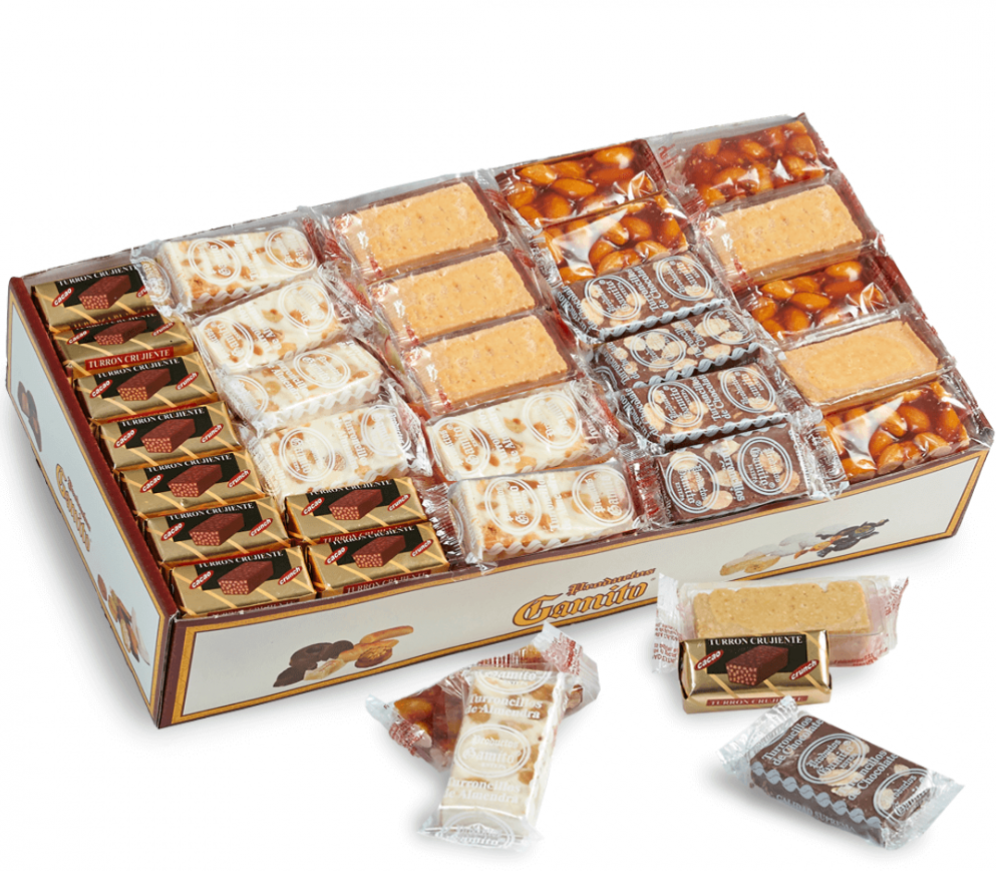
In Spain, Christmas is celebrated around the table, and the end of every meal belongs to sweets. A tray of turrón, polvorones and marzipan takes centre stage on the table for weeks. Spanish Christmas traditions bring together Andalusian heritage, convent confectionery and traditional village recipes. This is why Spain's traditional Christmas sweets are enjoyed as a symbol of togetherness rather than simply as desserts.
France and Spain have more in common than one might think. In Provence, the treize desserts bring together white and dark nougat, dried fruits and dates, while the rest of the country celebrates with bûche de Noël and marrons glacés. These are festive treats that people share, give as gifts and look forward to all year long. This is why Spanish Christmas specialities feel both familiar and surprising to French palates.
French food lovers appreciate provenance, traditional recipes and artisanal craftsmanship. Spanish Christmas gastronomy offers precisely that: products protected by Protected Geographical Indications (PGI) and the benefits of the Mediterranean diet, recognised by UNESCO in 2010 as an Intangible Cultural Heritage of Humanity. There is so much to discover, because exploring Spanish desserts means going far beyond paella and tapas.
Traditional Spanish Christmas Sweets That Win Over French Food Lovers
Four names sum up Spanish Christmas confectionery. Each has its own texture, history and a guaranteed place on the festive table.
Traditional Spanish Turrón: The Great Christmas Classic
Traditional Spanish turrón is made with almonds, honey, sugar and egg white. It comes in two main varieties: hard Alicante turrón, with its crunchy texture, and soft Jijona turrón, smooth, creamy and melt-in-the-mouth. Both are protected by geographical indications. For anyone familiar with Montélimar nougat, turrón is a close relative worth discovering, with an even richer almond flavour.
Spanish Polvorones: A Unique Texture That Melts in Your Mouth
Spanish polvorones are small, oval-shaped sweets made with toasted flour, lard, sugar and almonds. They are dusted with icing sugar and individually wrapped in tissue paper. Their charm lies in their texture: firm at first, they crumble with the first bite and melt in your mouth. That is precisely where their name comes from, as polvo means dust or powder in Spanish.
Mantecados from Estepa: Andalusian Tradition in Every Bite
Mantecados from Estepa are round baked pastries made with flour, lard and sugar, and flavoured with cinnamon, lemon, almonds or chocolate. According to the PGI specifications, they have been made using the same recipe for more than a hundred years. Soft and aromatic, they are among Estepa's most iconic traditional sweets and the perfect introduction to Andalusian confectionery.
Spanish Marzipan: Almond Sweetness with Historic Roots
Spanish marzipan combines ground almonds and sugar, using a recipe inherited from Andalusian confectionery traditions. Toledo is its capital and holds the Protected Geographical Indication (PGI) for Mazapán de Toledo. It comes in the form of figurines, eel-shaped creations and small pastries, and is part of the Mediterranean Christmas desserts that bring to mind French calissons and pâte d'amande. It is the perfect sweet treat for almond lovers.
Estepa: The Birthplace of Artisanal Mantecados
Few towns are as closely associated with a particular sweet as Estepa. This town in the province of Seville, with its winding streets and whitewashed houses, is home to more than twenty factories specialising in mantecados and polvorones. Every autumn, it fills with the aromas of the Christmas production season.
The history of mantecados dates back to the 16th century. The archives of the Santa Clara convent in Estepa record the hiring of confectioners to fulfil orders arriving from Seville and Madrid. Later, in the 19th century, women such as Micaela Ruiz, known as La Colchona, used leftover lard from traditional pig slaughtering to make sweets called mantecates. The history of polvorones is closely linked to that of mantecados, and today both enjoy PGI protection. Antequera also claims to be the birthplace of these sweets, but Estepa has made them a defining part of its identity.
Almonds, Honey and Olive Oil: The Finest Ingredients of the Mediterranean
The finest ingredients of the Mediterranean tradition form the foundation of these sweets: almonds, honey and olive oil. Almonds provide aroma and texture to polvorones, marzipan and turrón; honey sweetens traditional turrón; and olive oil brings life to lighter recipes that replace the lard used in traditional versions. Together with flour, sugar and cinnamon, they complete the traditional flavours of Spain.
The Artisanal Expertise That Sets Spanish Sweets Apart
Estepa's artisanal expertise lies in the details: kneading, shaping, patiently baking and wrapping each individual sweet. The liadoras, women who hand-wrap each polvorón in its individual paper wrapper, keep an age-old craft alive, passing it down from generation to generation. This artisanal approach to Spanish confectionery explains why traditional Spanish sweets retain a distinctive character that can be appreciated in every bite.
Spanish Christmas Sweets to Give as Gifts: An Elegant Alternative to the Gourmet Gift Box
Giving carefully selected food is a way of showing appreciation. In France, when people think of gourmet Christmas gifts, the answer is almost always a coffret gourmand.
The Christmas gourmet gift box has become a French classic. It is given to family members, clients and colleagues because it combines attractive presentation, quality products and reasonable pricing. During the festive season, an assortment allows every guest to find their favourite flavour and makes the gift perfect for sharing around the table.
Spanish sweets make wonderful gifts because they offer something many gourmet gift boxes do not: a story behind every product. The tissue-paper wrapping of polvorones, the festive boxes of Estepa mantecados and the variety of flavours create an elegant yet understated gift. They also offer a pleasant surprise to anyone who has already tried everything French pastry has to offer. These are Christmas gourmet gifts with their own distinctive identity.
Gourmet Gift Box Ideas Featuring Spanish Specialities
A classic gift box can bring together cinnamon and lemon mantecados, polvorones and traditional wine rings (roscos de vino). A discovery box can combine turrón, marzipan and mantecados, offering a journey through Spanish Christmas traditions in a single gift. And a family-sharing box, featuring assorted flavours and a packet of quality coffee, makes an excellent corporate gift. With these Spanish Christmas specialities, every gift box tells a different story.
How to Enjoy Spanish Christmas Sweets Like a Food Connoisseur
Spanish sweets are best enjoyed when given the right moment and the perfect accompaniment.
A slightly bitter espresso creates a wonderful contrast with the sweetness of cinnamon mantecados. Thick, lightly sweetened hot chocolate is the classic companion to polvorones. With turrón and marzipan, a sweet wine such as Pedro Ximénez, Moscatel or, for French consumers, Banyuls creates a memorable end to any meal.
After Christmas dinner, the tray of sweets can be brought to the table with coffee and served alongside the traditional bûche de Noël or even as an alternative to it.
It is best to serve small portions, remove the wrappers at the last moment and simply enjoy. In Spain, the tray is passed from hand to hand and replenished over several days. Nobody eats alone. For younger family members, it is almost a game, with one classic trick: gently squeeze the polvorón before unwrapping it to prevent it from crumbling as soon as the paper is removed. Sharing is part of the flavour of these sweets.
Premium Spanish Sweets for the French Market: The Dulces Gamito Offering
Among Estepa's confectionery manufacturers, Dulces Gamito is a recognised name for anyone looking for premium-quality Spanish sweets made using traditional artisanal methods.
Dulces Gamito is a family-owned company based in Estepa, in the province of Seville, with decades of experience in the confectionery industry. As a manufacturer of mantecados and polvorones, the company produces its own products in its factory and distributes them throughout Spain and internationally. During the Christmas production season, from September to December, the factory operates at full capacity to ensure every sweet reaches the table on time.
Authentic Flavours from Estepa to Give as Gifts in France
Dulces Gamito's products from Estepa bring together traditional flavours. Its range includes cinnamon, lemon, coconut and chocolate mantecados, as well as polvorones, alfajores and traditional wine rings. Halal-certified versions are also available.
In these recipes, vegetable fats replace animal fats, providing additional value in a diverse market such as France. These traditional Estepa sweets are easy to appreciate and perfect for sharing.
Dulces Gamito products are Spanish gourmet sweets with a clear origin: a recipe born in Estepa, a manufacturer with in-depth knowledge of the craft and a flavour that stands out from what is commonly found on French supermarket shelves.
For anyone looking for premium Spanish products in France, these high-quality Spanish sweets combine authenticity and elegance, making them ideal both as gifts and for serving at home.
Exporting Spanish Christmas Sweets to France: Opportunities for Distributors
The export of Spanish Christmas sweets to France offers access to a nearby but demanding market with a deeply rooted gourmet gifting culture.
France is one of the main destinations for Spanish agri-food exports, and French consumers are increasingly looking for products with a clear origin and distinctive character. Spanish gourmet products, from cured ham to olive oil, have already secured their place in specialist food shops (épiceries fines). Christmas sweets are the natural next step.
For anyone considering importing Spanish sweets into France, the opportunity is clear: a seasonal product, with demand concentrated over just a few weeks, and packaging that is ready for gifting.
Delicatessens, specialist food shops, Christmas markets, online stores and companies preparing gift hampers for their clients can all expand their product ranges with a distinctive offering.
Distributors of Spanish sweets in France can also rely on the quality credentials of Estepa mantecados and polvorones, backed by European recognition through their Protected Geographical Indications (PGI).
Dulces Gamito as a Partner for Wholesalers and Importers in France
As a wholesale supplier of Spanish Christmas sweets, Dulces Gamito brings extensive export experience to the table. Since the 1990s, the company has been supplying its mantecados and polvorones to markets around the world, with its own production facilities in Estepa and an established export offering.
Flavours know no borders, and this becomes especially clear at Christmas. Every corner of Europe celebrates the festive season with its own traditional sweets: panettone, stollen, nougat and turrón.
Taking a closer look at Spanish gourmet traditions helps us understand what brings Europeans together: flour, almonds, honey and the custom of sharing. Discovering the sweets of our neighbours is a delicious way to travel without leaving home.
This year, the French Christmas table can welcome one more guest: a tray of mantecados, polvorones, turrón and marzipan.
Whether given as gifts or served with after-dinner coffee, Spanish Christmas sweets bring the warmth of the Mediterranean into every home. And for anyone looking for quality, Estepa and Dulces Gamito are an excellent place to start.
Related posts
-
 Christmas Carols
Christmas is a time full of joy, family gatherings, and traditions that have endured over the centuries. Among these...Read more
-
 Homemade Mantecados Recipe: The Traditional Christmas Sweet
Christmas brings with it the unmistakable aroma of traditional sweets, and one of the most iconic in Spain is the...Read more
-
 Spanish Christmas Traditions: A Look at Festive Customs
Christmas in Spain is a time of year marked by tradition, family and joy. The streets are filled with Christmas...Read more
-
 What are mantecados?
Have you ever wondered what mantecados are and where they come from? Traditional Spanish pastries are full of...Read more
-
 History and Origin of Christmas: A Journey Through Time and Tradition
Christmas, a celebration that envelops us in the magic of twinkling lights, laughter, and the sweet fragrance of...Read more
Leave a comment